
 FileScanner.online
 URLScanner.online
Download the full PDF report
Get the complete analysis with all citations, charts, and technical appendices. Enter your email below to receive the download link.
Why NIS2 Changes Everything for Spanish Businesses
The transition from the original NIS Directive to NIS2 represents one of the most significant regulatory shifts for the Spanish private sector in the last decade. As 2026 approaches, the Spanish business landscape — characterized by its high density of SMEs — faces a reality where cybersecurity is no longer an optional IT expense but a foundational legal obligation with severe consequences.
The Spanish government's Anteproyecto de Ley de Coordinación y Gobernanza de la Ciberseguridad, approved by the Council of Ministers in January 2025, provides the definitive blueprint for how these European mandates are integrated into the national legal order. Spain closed 2025 as the second country most impacted by ransomware globally, trailing only the United States, which underscored the urgent need for NIS2's structural changes.
The new framework moves beyond the limited scope of "operators of essential services" to encompass a much broader range of sectors. The institutional architecture is centralized around the newly created Centro Nacional de Ciberseguridad (CNC), working in tandem with the CCN for the public sector and INCIBE for the private sector and citizens.
Entity Classification: Essential vs. Important
The determination of status under the new law uses a "size-cap" rule as the baseline. Generally, any entity operating in regulated sectors that employs more than 50 people or has an annual turnover exceeding €10 million is subject to the law. However, the State reserves the right to designate even smaller entities as "essential" if they play a critical role — such as sole providers of a service or entities whose failure would carry significant systemic risk.
Essential entities face an ex-ante and ex-post supervision regime — authorities can conduct proactive audits at any time. Important entities are subject to ex-post supervision, where authorities typically intervene only after an incident or evidence of non-compliance. However, both categories must implement the same technical measures and follow the same notification timelines.
| Sector Criticality | Industries | Essential Criteria | Important Criteria |
|---|---|---|---|
| High (Annex I) | Energy, Transport, Banking, Health, Water, Digital Infra, Public Admin, Space | Large enterprises (>250 employees or >€50M turnover) or critical providers designated by State | Medium enterprises (50-250 employees or €10M-€50M turnover) |
| Other Critical (Annex II) | Postal, Waste, Chemicals, Food, Manufacturing, Digital Providers, Research | Generally classified as Important unless specifically designated as Essential | Medium enterprises in these sub-sectors |
Boardroom Liability: Personal Responsibility for Directors
The most significant shift in the 2026 compliance landscape is the transition of cybersecurity from a technical concern to a matter of corporate governance. Article 20 explicitly targets the "órganos de dirección" (management bodies) of regulated entities. The days when a Board of Directors could delegate cybersecurity entirely to the IT department without oversight are over.
Management bodies are required to formally approve cybersecurity risk-management measures and oversee their implementation. Negligence can lead to personal consequences for directors. For Essential entities, authorities can temporarily prohibit individuals from exercising management functions at the executive level.
The Spanish transposition introduces "responsabilidad solidaria" (joint and several liability), where directors may be required to respond with their personal assets to satisfy fines imposed on the organization. To demonstrate due diligence, board members must undergo regular cybersecurity training to acquire the knowledge necessary to evaluate risks — this training mandate is a cornerstone of the 2026 roadmap, positioning education as a legal shield for executives.
Article 21: The 10 Technical Non-Negotiables
1. Risk Analysis and Information Security Policies — a formal risk management framework with structured methodology (ISO 27001 or ENS). 2. Incident Handling — documented procedures for detection, triage, and response with clear escalation paths. 3. Business Continuity and Crisis Management — BCP and DRP covering systemic failures, disasters, and large-scale cyberattacks, with "immutable backups" against ransomware.
4. Supply Chain Security — legally responsible for the security posture of direct suppliers, requiring vendor risk assessments, contractual security requirements, and continuous access monitoring. 5. Security in Network and Information Systems Acquisition — "Security by Design" principles integrated into the full IT asset lifecycle.
6. Policies to Assess Effectiveness — regular vulnerability scanning, penetration testing, and internal audits. 7. Basic Cyber Hygiene and Training — role-specific training covering current threats. 8. Cryptography and Encryption — encryption for data at rest and in transit, with "crypto-agility" for post-quantum readiness.
9. Human Resources Security, Access Control, and Asset Management — robust IAM based on "least privilege," secured employee lifecycle, and full hardware/software tracking. 10. Multi-Factor Authentication and Secure Communications — MFA for all sensitive and remote access, plus secure emergency communication systems for crisis coordination.
The 24/72/30 Notification Rule
The 2026 compliance roadmap enforces a rigorous timeline for notifying authorities of "significant incidents." An incident is deemed significant if it causes severe operational disruption or considerable financial loss, or affects other persons by causing substantial damage. Failure to adhere to these timelines is one of the most easily detectable forms of non-compliance and often triggers deeper regulatory investigations.
| Phase | Timing | Required Content |
|---|---|---|
| Early Warning | Within 24 hours of awareness | Preliminary alert indicating if the incident is malicious and if it has cross-border impact |
| Detailed Notification | Within 72 hours of awareness | Comprehensive impact assessment, severity analysis, and indicators of compromise (IoCs) |
| Intermediate Report | Upon authority request | Status update if resolution is taking extended time |
| Final Report | Within 1 month of initial notification | Root cause analysis, financial/operational impact summary, and corrective measures taken |
The Human Factor: Training as a Legal Shield
Approximately 80% of breaches begin with stolen credentials or social engineering, making training a specific legal requirement under Articles 20 and 21. For Spanish SMEs, the challenge of providing "regular, documented, and effective" training can be overwhelming, which is where specialized platforms like Aprensec become essential.
Aprensec addresses the human factor by automating the training lifecycle: Management-Specific Training modules designed to meet Article 20's board-level knowledge requirement. Continuous Awareness Campaigns that move beyond annual sessions to frequent micro-learning. Automated Phishing Simulations providing employees with realistic environments to practice threat detection — data shows such simulations can reduce phishing risk by up to 60%. And Compliance Documentation that generates the evidence of training completion required by auditors to demonstrate "due diligence."
By positioning training as a measurable security control, SMEs can transform their workforce into a distributed sensor network capable of reporting threats before they escalate into "significant incidents."
Leveraging ENS and ISO 27001 for Compliance
Spain's unique regulatory history provides a significant advantage. The Esquema Nacional de Seguridad (ENS), originally designed for the public sector, has been updated (Royal Decree 311/2022) to align closely with NIS2 requirements. The CCN has explicitly stated that the ENS is the most effective "shortcut" to demonstrating compliance.
An organization already certified under the ENS (Basic, Intermediate, or High level) will find that the vast majority of Article 21 requirements are already met. Similarly, ISO/IEC 27001 provides an internationally recognized framework covering the governance and risk management aspects. The 2026 roadmap suggests that SMEs should leverage these existing standards rather than "reinvent the wheel."
Gap Assessment: From Confusion to Action
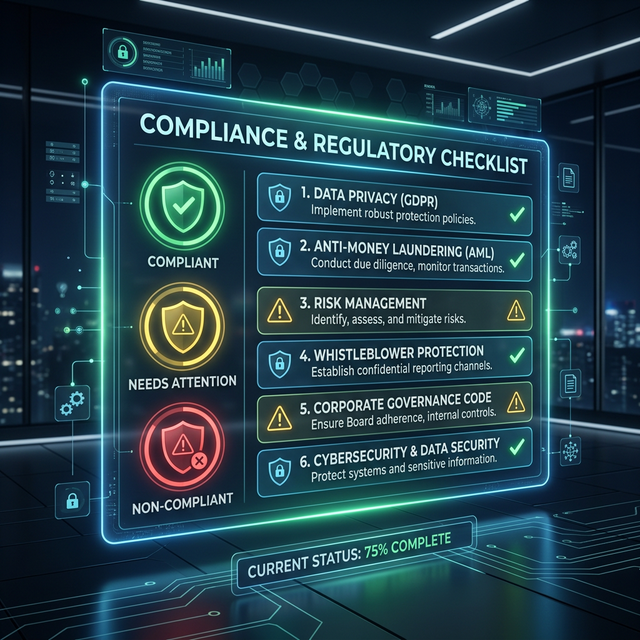
To move from confusion to action, Spanish SMEs should conduct a formal Gap Assessment. This process identifies the distance between the current state and the 2026 requirements across key compliance domains.
Key assessment questions include: Has the Board formally approved a Cybersecurity Risk Strategy? Have directors received documented NIS2 liability training? Is there a formal risk assessment methodology (e.g., MAGERIT)? Can you detect and notify a breach within 24 hours 24/7/365? Do you have offline/immutable backups tested in the last 6 months? Have you audited the security of your top 5 critical IT providers? Is MFA mandatory for all VPN and administrative access? Do employees receive phishing simulations at least quarterly?
By systematically answering these questions, an SME can create a prioritized Action Plan that addresses the highest-risk gaps first, ensuring that by the time a regulator requests evidence, the organization can demonstrate a clear path toward full conformity.
The Sanctions: Up to €10 Million or 2% of Global Turnover
The 2026 compliance landscape is backed by one of the most severe sanctioning regimes in the history of European technology law. Essential entities face fines of up to €10 million or 2% of global annual turnover (whichever is higher), plus temporary suspension of executive functions and public identification of responsible parties. Important entities face fines of up to €7 million or 1.4% of global annual turnover, with formal warnings, binding instructions, and public disclosure.
Spanish authorities have emphasized "effectiveness, proportionality, and dissuasiveness" when applying these fines. The Anteproyecto also introduces the risk of "daño reputacional" (reputational damage) through public identification of non-compliant entities — leading to loss of contracts, trust, and market value.
As Spanish SMEs navigate this roadmap, the overarching lesson is that cybersecurity has evolved from a peripheral technical issue to a core business risk. By leveraging established frameworks like the ENS and utilizing modern training platforms like Aprensec to address the human element, SMEs can meet these legal burdens and transform them into a competitive advantage. In 2026, a high level of cybersecurity maturity will not just be a matter of avoiding fines; it will be the hallmark of a professional, reliable, and sustainable enterprise in the European digital market.
| Entity Type | Maximum Fine | Non-Financial Sanctions |
|---|---|---|
| Essential Entities | The higher of €10M or 2% of global annual turnover | Temporary suspension of executive functions; public identification of responsible parties |
| Important Entities | The higher of €7M or 1.4% of global annual turnover | Formal warnings; binding instructions; public breach disclosure |
Download the full PDF report
Get the complete analysis with all citations, charts, and technical appendices. Enter your email below to receive the download link.