 FileScanner.online
 URLScanner.online
The Crown Jewel Pivot: When Security Tools Become the Attack Surface
The defining threat narrative of Q1 2026 is not a single spectacular breach. It is a structural paradigm shift in offensive strategy: the systematic targeting of the software and security tools that organizations trust most. For years, the axiom of enterprise defense has been to patch systems, deploy EDR, monitor endpoints, and trust the security vendor's own infrastructure. That axiom is now under direct attack.
Over a 72-hour window spanning March 31 to April 1, 2026, North Korean state actor Sapphire Sleet successfully compromised Axios — the HTTP client library downloaded over 70 million times per week by developers worldwide — injecting a malicious dependency into versions 1.14.1 and 0.30.4. One week earlier, the TeamPCP campaign had compromised Trivy, the industry-standard open-source vulnerability scanner used by Kubernetes and cloud-native teams globally, along with KICS and LiteLLM. The cascading result of those earlier compromises was the theft of Cisco's GitHub credentials, leading to the exfiltration of source code from over 300 repositories — including unreleased AI Defense products and code used by U.S. government agencies.
The strategic implication is profound: adversaries have discovered that the highest-value target in any organization's software supply chain is not the application code itself — it is the security tooling wrapped around it. By compromising the scanner, the attacker does not merely gain access to one system; they gain access to every system that the scanner touches, authenticated with the privileges of the security infrastructure itself.
This report provides a comprehensive threat intelligence analysis of the most consequential cybersecurity developments of Q1 2026, from the supply chain weaponization cascade to the 808-victim March ransomware surge, two critical zero-day vulnerabilities under active exploitation, and the formal start of NIS2 enforcement across the European Union.
The Axios npm Compromise: Sapphire Sleet Infiltrates 70M Developer Pipelines
On March 31, 2026, Microsoft Security disclosed that Sapphire Sleet — a North Korean state-sponsored threat actor known for financially motivated operations targeting cryptocurrency and technology sectors — had successfully compromised the Axios npm package. The attack targeted versions 1.14.1 and 0.30.4, inserting a malicious dependency that silently downloaded Command-and-Control (C2) payloads from attacker-controlled infrastructure.
The technical mechanism was a classic dependency confusion attack augmented by a compromised maintainer account. Upon installation of the tampered packages, a secondary downloader retrieved Remote Access Trojans (RATs) cross-compiled for Windows, macOS, and Linux — ensuring no developer platform was excluded from the attack surface. The RATs established persistent, encrypted tunnels to Sapphire Sleet infrastructure, allowing the attackers to exfiltrate credentials, source code, and API keys from any environment where the package was installed.
The scale of exposure cannot be overstated. Axios is not a niche tool — it is one of the foundational HTTP libraries in the modern JavaScript ecosystem, deeply embedded in CI/CD pipelines, serverless functions, microservice architectures, and developer workstations across virtually every major industry. A 70 million weekly download figure means that even a 24-hour exposure window before detection created a theoretical attack surface spanning hundreds of thousands of projects globally.
For organizations running JavaScript-based CI/CD pipelines or using any npm packages that depend on Axios, the immediate remediation priority is to audit all package-lock.json and yarn.lock files for the affected versions, rotate all credentials and API tokens accessible from affected build environments, review network logs for outbound connections to Sapphire Sleet-attributed C2 infrastructure, and update to Axios versions released after April 1, 2026. Tools like filescanner.online provide rapid behavioral analysis of downloaded packages and artifacts, enabling security teams to identify RAT payloads embedded in seemingly legitimate dependency updates before they execute.
| Attack Parameter | Details | Impact Severity |
|---|---|---|
| Threat Actor | Sapphire Sleet (DPRK / North Korea) | Nation-State — High |
| Compromised Versions | Axios 1.14.1 and 0.30.4 | Critical — Millions of installations |
| Weekly Package Downloads | 70+ million | Massive supply chain blast radius |
| Payload Type | Cross-platform RAT (Win/macOS/Linux) | Full remote access, credential theft |
| Attack Mechanism | Compromised maintainer + malicious dependency | Silent, auto-installed on npm install |
| Discovery Timeline | First exploitation March 31, disclosed April 1 | ~24-hour exposure window before alert |
TeamPCP: The 8-Day Multi-Ecosystem Cascade That Breached Cisco
While the Axios compromise was still being triaged, the forensic aftermath of the TeamPCP campaign — active from March 19 to March 27 — was revealing a more sophisticated and structurally damaging chain of compromises. TeamPCP's strategy was precisely calibrated: rather than targeting a generic popular library, the group specifically selected tools that security teams deploy to protect infrastructure. The target list read like a catalog of modern DevSecOps: Trivy (the leading open-source vulnerability scanner for containers and cloud), KICS (Keep Infrastructure as Code Secure), LiteLLM (the multi-LLM API gateway used in enterprise AI deployments), and Telnyx (communications infrastructure).
The attack methodology combined typosquatting packages with compromised GitHub Actions workflows, injecting malicious CI/CD steps that silently exfiltrated credentials stored in pipeline environment variables. Because these tools are used by security teams — and therefore run with elevated privileges and access to production secrets — the credential harvest from a single compromised Trivy deployment could grant access to an entire organization's container registry, Kubernetes clusters, and cloud environments.
The cascading impact materialized on April 2, 2026, when Cisco confirmed that source code from over 300 GitHub repositories had been exfiltrated by the ShinyHunters threat group. The attack vector traced directly to Trivy credentials stolen during the TeamPCP campaign. Among the stolen repositories were source code for Cisco AI Defense, unreleased AI Assistant products, and infrastructure code used by U.S. government agencies, major banks, and Business Process Outsourcing (BPO) firms that are Cisco partners. ShinyHunters subsequently issued extortion demands, threatening to publish the stolen code if ransom conditions were not met.
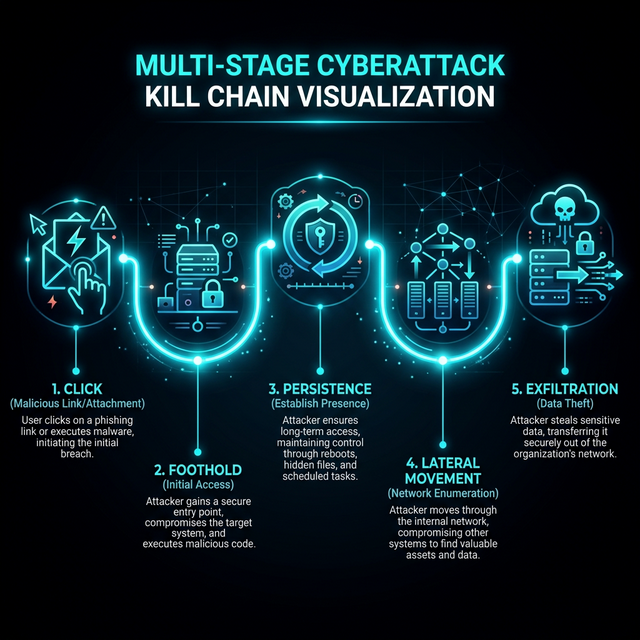
This cascade illustrates a new attack architecture that security teams must internalize: the "trust chain inversion." In a conventional attack, an adversary must bypass security controls. In a supply chain weapons attack, the adversary becomes the security control — or more precisely, compromises it — gaining the same access grants and execution privileges that were designed to protect the environment. The logical defense implication is that security tooling must itself be treated as a high-value target, subject to the same integrity verification, secrets management, and behavioral monitoring applied to any other privileged component.
FortiClient EMS Zero-Day: CVE-2026-35616 Exploited in the Wild
On April 4, 2026, Fortinet published an emergency security advisory confirming that CVE-2026-35616 — a critical Improper Access Control vulnerability in FortiClient Endpoint Management Server (EMS) — had been under active exploitation since March 31, 2026. With a CVSS score of 9.8, the vulnerability allows unauthenticated remote attackers to execute unauthorized code or commands on the EMS server, effectively bypassing all endpoint security management controls.
The technical root cause is an authentication bypass in the EMS REST API gateway. An attacker with network access to the FortiClient EMS management port can send specially crafted API requests that bypass the authentication middleware, gaining direct access to the EMS administration interface. From this position, the attacker can deploy arbitrary configuration changes to all managed endpoints, push malicious software updates disguised as legitimate FortiClient updates, harvest endpoint inventory data including network topology and credential stores, and establish persistent backdoors across the entire managed endpoint fleet.
The critical severity of this exploitation pathway stems from the privileged position FortiClient EMS occupies within enterprise architectures. EMS is typically deployed to manage endpoint security policies across thousands of workstations and servers. A compromise of the EMS server does not merely affect one endpoint — it grants adversarial control over the security baseline of the entire organization. Emergency hotfixes were released on April 4; organizations running FortiClient EMS must treat this as an immediate, P0 remediation priority.
For organizations that cannot patch immediately, the recommended interim mitigations include restricting network access to the FortiClient EMS management interface to a dedicated management VLAN, enabling enhanced API logging to detect anomalous unauthenticated requests, and deploying network-level controls to block external access to the EMS management port. Security teams should also use urlscanner.online to inspect any suspicious inbound connections or C2 callback URLs identified in EMS logs, enabling rapid reputation assessment without exposing internal systems to potentially malicious infrastructure.
| CVE Parameter | CVE-2026-35616 | Operational Implication |
|---|---|---|
| CVSS Score | 9.8 Critical | Immediate, maximum-priority patching |
| Vulnerability Type | Improper Access Control / Auth Bypass | Unauthenticated code execution |
| Attack Vector | Network — EMS REST API | No credentials required for exploitation |
| First Exploited | March 31, 2026 | Active exploitation before public disclosure |
| Affected Product | FortiClient EMS (all versions prior to hotfix) | Enterprise endpoint management backbone |
| Blast Radius | All managed endpoints under EMS control | Organization-wide endpoint compromise |
Chrome CVE-2026-5281: The Fourth Zero-Day of 2026 Under Active Exploitation
On April 1, 2026, Google released an emergency update for Chrome addressing CVE-2026-5281 — a Use-After-Free (UAF) vulnerability in the WebGPU Dawn implementation. This marks the fourth Chrome zero-day exploited in the wild during 2026 alone, a pace that significantly exceeds historical norms and reflects the accelerating commoditization of browser exploit development driven by AI-assisted vulnerability research.
Use-After-Free vulnerabilities in browser rendering engines are among the most operationally dangerous classes of flaws, as they allow attackers to achieve arbitrary code execution within the browser's renderer process. In Chrome's multi-process architecture, a successful renderer exploit is typically combined with a sandbox escape to achieve full code execution on the victim's operating system. CISA added CVE-2026-5281 to its Known Exploited Vulnerabilities (KEV) catalog on April 1, mandating federal agencies to patch by April 15, 2026.
The recurring pattern of Chrome zero-days in 2026 demands a strategic response beyond simple patching cadence. Each of the four zero-days has targeted a different browser subsystem — JavaScript engine (CVE-2026-2796 in the Mozilla-Anthropic collaboration), PDF parsing, V8 optimization, and now WebGPU — suggesting that threat actors are systematically auditing all browser attack surfaces with AI-assisted tools. The implication for enterprise browser security is a move toward mandatory use of Chrome's Enhanced Safe Browsing, enterprise-managed browser policies that disable experimental APIs like WebGPU for high-risk user populations, and browser isolation technologies for sensitive workflows. For individual users, the critical immediate action is to ensure Chrome has been updated to the version released on or after April 1, 2026 (Settings → About Chrome → verify version number).
| Chrome Zero-Days in 2026 | CVE | Component | Date |
|---|---|---|---|
| Zero-Day #1 | CVE-2026-2796 | SpiderMonkey JIT (Firefox companion) | January 2026 |
| Zero-Day #2 | CVE not yet released | V8 JavaScript Engine | February 2026 |
| Zero-Day #3 | CVE not yet released | PDF Parsing Module | March 2026 |
| Zero-Day #4 | CVE-2026-5281 | WebGPU Dawn (UAF) | April 1, 2026 |
March 2026 Ransomware Report: 808 Victims, 65 Active Groups, and the Qilin Dominance
The March 2026 ransomware threat landscape report, published by Breachsense and corroborated by BlackFog telemetry, documents a threat environment that has reached unprecedented operational scale. March 2026 recorded 808 confirmed ransomware victims across 65 active threat groups — a 19% increase from February 2026 and a quarterly pace that projects to approximately 8,660 victims annualized for 2026, representing an 18.5% increase over the full-year 2025 figure.
The most strategically significant development in the March data is the emergence of Qilin as the dominant single ransomware operator by victim count, claiming 131 confirmed victims — the highest monthly total ever recorded for a single group. Qilin's tactical evolution has been rapid and deliberate: the group has shifted from opportunistic encryption-focused ransomware to a sophisticated extortion-only model combined with targeted data theft from critical sectors including healthcare, legal, and critical national infrastructure. Qilin's technical arsenal now includes a custom Rust-based encryptor with per-victim key management, automated OSINT profiling of victim organizations to calibrate ransom demands, and a dedicated "data leak negotiations" portal with countdown timers designed to maximize psychological pressure.
The broader trend confirmed by the March data is the acceleration of the encryption-to-extortion strategic pivot documented in the 2025 threat landscape. The operational calculus is straightforward: encryption requires malware deployment, creates detectable system-level artifacts, and can be mitigated by mature backup strategies. Data theft, by contrast, leaves a lighter forensic footprint, requires no recovery key negotiation, and creates a persistent long-tail liability — once data is stolen, it can be weaponized indefinitely, re-sold, or weaponized in regulatory complaints under GDPR and NIS2.
For security teams, the March data reinforces two critical priorities: first, the assumption that "we have good backups" is no longer a complete ransomware mitigation strategy; and second, data exfiltration detection — through DLP tooling, anomalous outbound traffic monitoring, and behavioral analysis of privileged user activity — must be elevated to equal priority alongside endpoint protection and backup validation.
| March 2026 Ransomware Metric | Value | Context |
|---|---|---|
| Total Confirmed Victims | 808 | 19% increase from February 2026 |
| Active Ransomware Groups | 65 | Highest ecosystem fragmentation on record |
| Top Group (Qilin) | 131 victims | Highest single-group monthly total ever |
| 2026 Annualized Pace | ~8,660 victims | 18.5% increase vs. full-year 2025 |
| Extortion-Only Share | 65% | Up from 49% in H1 2025 |
| AI Phishing Success Rate | 54% | vs. 12% for traditional campaigns |
The Healthcare Catastrophe: Cegedim Santé, Stryker, and the Critical Sector Under Siege
March 2026 produced two of the most consequential healthcare-sector breaches in recent European and global history, demonstrating that critical health infrastructure has become a primary target for financially motivated threat actors. The choice of healthcare is strategic: patient data commands the highest black-market price of any personal data category, healthcare organizations are under intense operational pressure that creates favorable conditions for ransom payment, and the regulatory consequences of a GDPR-reportable breach create secondary extortion leverage.
Cegedim Santé, a major French healthcare IT provider serving general practitioners across France, confirmed that attackers had exfiltrated 15.8 million patient health records — making this one of the largest healthcare data breaches in European history. The stolen dataset contained 165,000 sensitive files including detailed physicians' clinical notes, diagnostic histories, prescription records, and patient identifiers. For the affected patients, the breach creates risks that extend well beyond financial fraud: sensitive health conditions, mental health records, and clinical notes can be weaponized for targeted social engineering, insurance discrimination, or direct extortion. Under GDPR Article 83(4), the potential regulatory exposure for Cegedim Santé reaches €10 million or 2% of global annual turnover.
The Stryker attack, disclosed in parallel, revealed a conceptually distinct but equally dangerous attack vector. Rather than deploying traditional malware, threat actors compromised a Microsoft Intune administrator account using a single stolen password — with no MFA in place — and used the legitimate administrative capabilities of the MDM platform to remotely wipe devices across 79 countries, affecting over 90,000 healthcare workers and disabling more than 200 telehealth sites. The incident resulted in zero deployed malware, minimal EDR alerts, and complete operational devastation — achieved entirely through the abuse of legitimate administrative tooling. This "living off the land" approach renders signature-based detection entirely ineffective and underscores the critical importance of privileged access management (PAM), hardware-based MFA enforcement for all administrative accounts, and behavioral monitoring for unusual MDM operations.
For both consumer and enterprise audiences, the Cegedim Santé breach serves as a reminder that medical data — once exfiltrated — cannot be "changed" like a compromised password. Unlike a financial credential that can be cancelled, a stolen medical history is a permanent liability. filescanner.online provides individuals with a tool to analyze suspicious email attachments that may arrive in the wake of such breaches, as threat actors routinely exploit news of major healthcare breaches to launch targeted phishing campaigns impersonating breach notification communications.
The European Compliance Trifecta: NIS2 Enforcement Begins Amid DORA and EU AI Act Convergence
April 2026 marks a definitive inflection point for EU-regulated organizations: the end of the NIS2 grace period and the formal initiation of administrative penalty proceedings by national competent authorities across member states. The first NIS2 administrative fines — reaching up to €10 million or 2% of global annual turnover for essential entities — have been issued, signaling that the regulation has transitioned from a compliance framework to an enforcement reality.
For Chief Information Security Officers (CISOs) and legal teams in Spain and across the EU, the complexity of the current regulatory environment is without historical precedent. Three major frameworks — NIS2, DORA (Digital Operational Resilience Act, fully applicable since January 17, 2025), and the EU AI Act (majority of provisions applicable from August 2, 2026) — overlap in their technical requirements and reporting obligations in ways that create significant compliance risk for unprepared organizations.
The most operationally dangerous overlap is in incident reporting. A single AI-related cyber incident affecting a financial institution may simultaneously trigger a NIS2 72-hour initial notification to the national CSIRT, a DORA 4-hour initial notification for significant ICT incidents to the competent financial authority, and an EU AI Act notification requirement if a high-risk AI system was involved or compromised. Organizations that have not mapped the intersection of these reporting obligations face the compounded risk of regulatory penalties from multiple authorities for the same underlying incident.
Spain's AESIA (Agencia Española de Supervisión de la Inteligencia Artificial), which published the EU's first national AI Act operational guidelines in March 2026, has indicated that its supervisory priorities for Q2 2026 will focus on high-risk AI systems in critical infrastructure and financial services — precisely the sectors most exposed to the NIS2/DORA/AI Act triple overlap. Spanish organizations, particularly those in the PYME (SME) segment that lack dedicated compliance teams, should prioritize mapping their AI system inventory against Annex III of the EU AI Act before August 2026, and simultaneously verify their NIS2 incident reporting procedures are operationally tested and validated.
| Framework | Key Obligation | Penalty Regime | Status |
|---|---|---|---|
| NIS2 | 72h incident notification; supply chain security; management accountability | €10M or 2% global turnover | ENFORCING — First fines issued Q1 2026 |
| DORA | 4h significant ICT incident notification; resilience testing; third-party risk | Up to 1% daily global turnover | ACTIVE since Jan 17, 2025 |
| EU AI Act | Risk classification; documentation; human oversight; transparency | €40M or 7% global turnover | ENFORCEABLE Aug 2, 2026 |
| ENS 2.0 (Spain) | Continuous monitoring; supply chain integrity; automated verification | Administrative sanctions | UPDATED for AI era 2026 |
Geopolitical Escalation: Iran's Password-Spraying Campaign Against M365 Environments
The geopolitical dimension of the April 2026 threat landscape cannot be separated from the operational. Palo Alto Unit 42 has documented a systematic Iranian state-sponsored password-spraying campaign targeting Microsoft 365 environments, operating on a precise cadence of March 3, March 13, and March 23, 2026 — coordinated with wider retaliatory operations following the US-Israeli Operation Epic Fury documented in this publication's March 4 analysis.
The campaign targeted over 300 organizations in Israel and 25+ organizations in the UAE, focusing on organizations in the defense, energy, and financial services sectors. The attack methodology — credential stuffing and password-spray attacks against Microsoft 365 authentication endpoints — is technically unsophisticated but operationally effective against organizations that have not enforced phishing-resistant MFA. The choice of M365 as the target surface reflects the strategic value of compromising enterprise email and collaboration environments: a successful M365 compromise provides access to organizational communications, SharePoint document libraries, Teams conversations, and the OAuth trust relationships that connect M365 to dozens of integrated enterprise SaaS applications.
The Iranian campaign's structured 10-day cadence suggests automated execution within a larger operational framework. Security teams in sectors targeted by Iranian APT activity — and particularly organizations with any commercial or operational exposure to the Middle East — should validate that their M365 authentication policies enforce FIDO2/hardware-key MFA for all users, that legacy authentication protocols (SMTP AUTH, IMAP, POP3) are fully disabled, that Conditional Access policies enforce compliant device requirements for all M365 access, and that sign-in risk policies automatically block high-risk authentication attempts. urlscanner.online can assist in identifying phishing pages that impersonate M365 login portals — a common second-stage tactic used after credential spray campaigns identify valid account targets.
| Campaign Parameter | Details | Recommended Mitigation |
|---|---|---|
| Threat Actor | Iranian State-Sponsored (Unit 42 attribution) | N/A |
| Attack Dates | March 3, 13, and 23, 2026 | Ongoing — next cycle anticipated mid-April |
| Primary Targets (Israel) | 300+ organizations — defense, energy, finance | Enforce FIDO2 MFA immediately |
| Primary Targets (UAE) | 25+ organizations | Disable legacy authentication protocols |
| Attack Method | Credential stuffing / M365 password spray | Conditional Access with sign-in risk policies |
| Strategic Goal | Email and document intelligence collection | Monitor OAuth consent grants and delegations |
The AI Attack Acceleration Inflection: From Tool to Threat Surface
The Cloud Security Alliance's 2026 AI Cybersecurity Survey, published April 2, 2026, synthesizes responses from 1,500 security leaders to quantify a threshold that many defenders have felt qualitatively but struggled to articulate empirically: 73% of security leaders report that AI-powered threats are now materially impacting their security operations on a week-to-week basis — not as a future risk, but as a present operational reality.
Microsoft's Threat Intelligence team simultaneously published a landmark analysis documenting the acceleration of AI weaponization by nation-state actors, titled "Threat Actor Abuse of AI Accelerates from Tool to Cyberattack Surface." The report documents a qualitative shift: AI is no longer merely a tool used by threat actors to enhance productivity. It has become an attack surface in its own right, as adversaries now specifically target AI systems, models, and agentic workflows as vectors for data exfiltration, model poisoning, and organizational disruption.
The most operationally significant finding is the emergence of AI-enabled malware capable of altering its own behavior mid-execution — a capability that fundamentally undermines signature-based detection. By 2026, multiple nation-state actors have deployed malware strains that use on-device LLM inference to dynamically select persistence mechanisms, evasion techniques, and lateral movement pathways based on real-time environmental analysis of the compromised host. This capability breaks the fundamental premise of Indicators of Compromise (IoC) sharing: when each malware instance behaves differently based on its context, static signatures and even behavioral signatures derived from previous instances have significantly reduced fidelity.
The industry response is coalescing around a paradigm of "behavioral governance over signature detection" — shifting the detection anchor from "what does this executable look like" to "what is this process doing to the system's state over time." This shift requires organizations to invest in runtime behavioral analytics that can detect anomalous process trees, unusual memory access patterns, and lateral movement behaviors — rather than relying on file reputation or hash matching.
Strategic Defense Imperatives: Q2 2026 Priorities
The convergence of supply chain weaponization, accelerating ransomware, four Chrome zero-days, a critical FortiClient EMS flaw, and AI-powered threat escalation demands a prioritized, sequenced response. For security teams in Q2 2026, the following imperatives are ordered by urgency and impact:
Immediate (24-48 hours): Audit all npm dependency trees for Axios versions 1.14.1 and 0.30.4; rotate all CI/CD credentials and environment secrets accessible from affected build environments. Patch FortiClient EMS against CVE-2026-35616; restrict EMS management interface network access pending patch deployment. Update all Chrome installations to the April 1, 2026 release addressing CVE-2026-5281.
Short-term (This week): Conduct a supply chain audit of all security tooling — specifically scanners, linters, and CI/CD integrations — treating them as high-privilege targets subject to the same integrity controls as production systems. Enforce hardware-key (FIDO2) MFA for all Microsoft 365 accounts, prioritizing administrative accounts and users in sectors targeted by Iranian APT activity. Disable all legacy authentication protocols in M365 tenant configuration.
Strategic (Q2 2026): Map your AI system inventory against EU AI Act Annex III before August 2, 2026 to identify high-risk AI systems requiring documentation, risk management, and human oversight frameworks. Test your NIS2 incident reporting procedures end-to-end — the 72-hour notification requirement has no grace period under enforcement. If your organization is subject to DORA, validate that your critical ICT systems have documented resilience testing schedules and that third-party risk assessments cover your security tooling vendors.
As both filescanner.online and urlscanner.online demonstrate, the most effective defense against supply chain attacks and phishing lures is pre-execution verification — analyzing files before running them and URLs before visiting them. In an environment where 70 million developer pipelines can be compromised in a single package update and where AI-generated phishing achieves a 54% success rate, the discipline of always verifying before trusting is not merely good practice — it is the foundational layer of any viable 2026 security posture.
| Priority | Action | Threat Mitigated | Timeline |
|---|---|---|---|
| P0 — Critical | Patch FortiClient EMS (CVE-2026-35616) | Unauthenticated RCE on EMS server | Immediate |
| P0 — Critical | Audit Axios npm versions + rotate CI secrets | DPRK supply chain RAT | Immediate |
| P0 — Critical | Update Chrome to post-April 1 release | CVE-2026-5281 browser exploitation | Immediate |
| P1 — High | Enforce FIDO2 MFA on all M365 accounts | Iranian credential-spray campaigns | This week |
| P1 — High | Security tooling supply chain audit | TeamPCP-style cascade compromises | This week |
| P2 — Strategic | EU AI Act Annex III inventory mapping | Regulatory penalty risk from August 2026 | Before August 2026 |
| P2 — Strategic | NIS2 incident reporting drill | 72-hour notification under enforcement | This quarter |
Conclusion: The Trust Layer Has Collapsed — Verification Must Replace Assumption
The central insight of Q1 2026 is neither a single vulnerability nor a single threat actor. It is a systemic failure of the assumption of trust that underlies the entire software supply chain. Developers have trusted npm packages maintained by pseudonymous contributors. Security teams have trusted their own scanners. Enterprise administrators have trusted MDM platforms. Cloud architects have trusted availability zones. In each case, adversaries have found a way to subvert that trust — not by breaking the technical safeguards, but by compromising the trusted entity itself.
The 808 ransomware victims of March 2026, the 15.8 million patients whose health records were stolen from Cegedim Santé, the 90,000 healthcare workers whose devices were remotely wiped via a stolen Intune password, and the hundreds of organizations exposed through the Cisco repository breach all share a common vulnerability: at some point in their security architecture, something was trusted without ongoing verification.
The industry term for the solution is Zero Trust Architecture. But the lesson of Q1 2026 is that Zero Trust must now be extended beyond network segmentation and identity verification into the software supply chain itself. Every dependency, every CI/CD integration, every security tool must be treated as a potential attack vector, subject to continuous integrity verification, behavioral monitoring, and the same skepticism applied to any external entity.
Aprensec's mission is to give organizations and individuals the verification tools that this new environment demands — whether scanning an executable before running it with filescanner.online, inspecting a suspicious link before clicking it with urlscanner.online, or accessing the threat intelligence and training needed to build the human layer of a genuine Zero Trust posture. In an era where the defenders themselves have become the target, the only viable path is to verify everything, trust nothing by default, and build resilience on evidence rather than assumption.